Need a vibratory hammer or drill-rig package sized to your soil log? Talk with an ABI application engineer today.
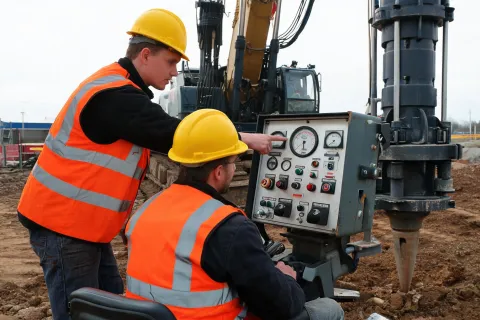
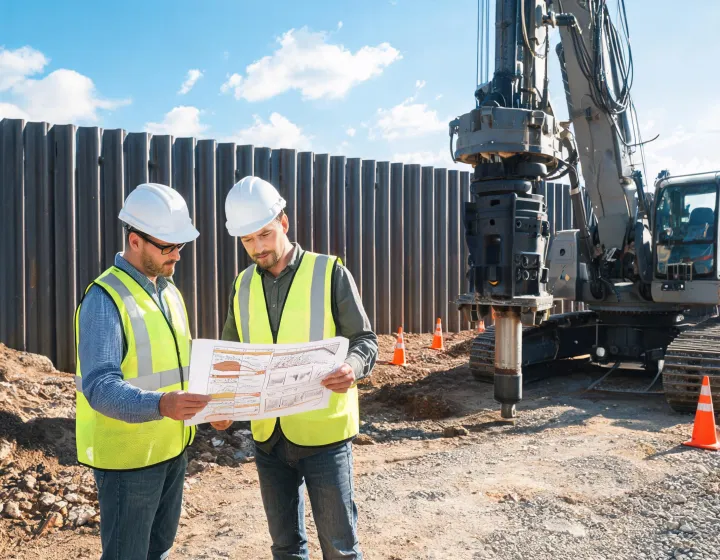
Foundation crew matching vibratory hammer to soil log

Application solutions

Find the Right ABI Package for Mining, Road, Building, or Water Work

Problem-led configurations—not a one-size catalog. Tell us the soil refusal risk, pile schedule, and carrier class; we return a vibratory hammer or drill-rig package sized to pile penetration depth targets.

How crews actually choose an ABI solution

On a West Texas mining pad, the first question was not “which model brochure?”—it was whether soldier piles would refuse in cemented sand. ABI mapped vibration frequency to CPT tip resistance and paired a VH-90 class hammer with a Tier 4 pack so night shifts stayed inside the mine’s emissions window.

“They sized centrifugal force to our densification plan before the first pile, not after we burned two days of contingency.” — Project Director, quarry infrastructure program

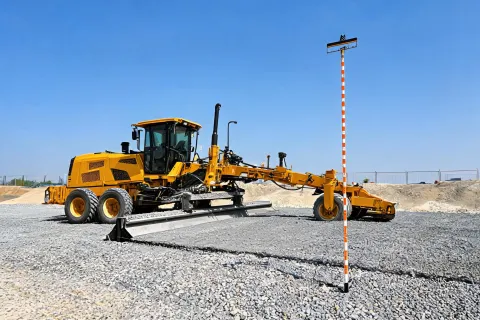
Highway retaining-wall teams usually arrive with a different constraint: adjacent pavement settlement limits. There we bias toward mid-frequency sheet-pile vibros and laser gravel graders that finish the backfill pad without waiting on a separate earthworks subcontractor.

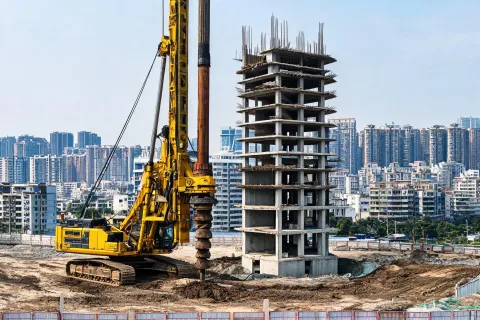
Urban building cores push mast height and operating weight. CFA / kelly packages get plumb-tolerance checklists and rotary drilling torque baselines so the first bored pile becomes the QA reference for the rest of the mat.

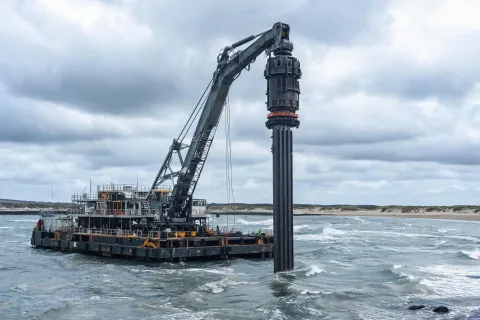
Water and flood-control jobs add corrosion and tide windows. Clamp jaws, hose routing, and power-pack placement are chosen so crews can chase low tide without improvising unsafe staging.

Solution selection questions we hear every week

How do you decide between a vibratory hammer and a drill rig for my soil log?

If the design is displacement piles or sheet piles in granular soils, we start with vibration frequency and centrifugal force. If the design is bored piles, anchors, or CFA in cohesive strata, we move to rotary drilling torque, mast geometry, and operating weight limits. Mixed profiles often need both—vibro for temporary works, drill rig for permanent piles—especially when ground pressure on spoil berms would overload a heavier crawler choice.

Can ABI package a mining infrastructure pad end-to-end?

Yes. Typical packages include soldier-pile vibros, gravel graders for the working pad, and a parts kit for eccentric bearings sized to the shift calendar. We also document ground-pressure assumptions so temporary works do not overload soft spoil berms.

What does a roadway retaining-wall solution include?

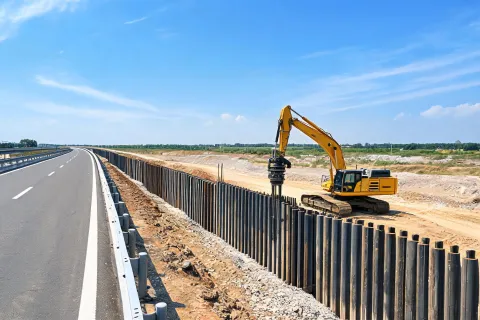
Sheet-pile or H-pile vibro, vibration-frequency map referenced to nearby utilities, laser grader for aggregate leveling, and operator coaching on battered-pile clamp engagement. Lead times are quoted against your wall-station schedule, not a generic factory slot.

Will you train our crew on water-project tide windows?

Commissioning on floodwall and cofferdam jobs includes tide-aware staging, hose management above splash zones, and emergency clamp-release drills. Training seats are included with first-machine packages for contracted fleets.

Selection considerations

Technical trade-offs foundation buyers debate before the PO

Two decisions show up on nearly every North American piling estimate. ABI does not pick a winner in the abstract—we map each side to soil logs, vibration limits, and power availability on your carrier.

Vibratory sheet / H-pile driving vs. bored piles (CFA / kelly)

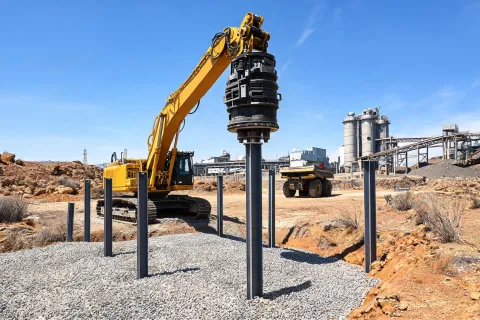
Vibro side: Displacement piles in granular soils usually finish faster when vibration frequency and centrifugal force match CPT tip resistance; temporary works and floodwall sheet piles often stay on the critical path only with vibro productivity.

Bored-pile side: When adjacent utilities or settlement thresholds cannot tolerate vibration, rotary drilling torque inside a casing wins—even if daily meterage is lower—because the risk register stays inside geotech limits.

Mixed profiles commonly need both: vibro for temporary sheet piles, drill rig for permanent piles when ground pressure on spoil berms would overload a heavier crawler choice.
Electric power pack vs. diesel Tier 4 Final pack

Electric side: Fixed yards and indoor fabrication halls cut fuel and emissions paperwork; hydraulic system pressure stays stable when site power is sized to the published L/min @ bar demand.

Diesel Tier 4 Final side: Remote mining pads and coastal floodwalls without reliable high-amp service need a self-contained pack. EPA Tier 4 Final with DPF / SCR keeps urban permit windows open, but DEF logistics and aftertreatment service become part of the PM calendar.

Total cost of ownership flips by duty cycle: electric wins on long-running fixed pads; diesel wins when the machine must chase tide windows or move between pads weekly.

Know the boundaries

Operating limits we disclose before commissioning

  • Soil refusal / dense cemented layers: Published pile penetration depth assumes granular or medium-dense strata confirmed by SPT / CPT. Cemented sand, cobble lenses, or refusal layers can stop a VH-class vibro short of design tip—then the package must switch to pre-drill or a rotary drilling torque path rather than forcing higher centrifugal force.
  • Carrier hydraulic envelope: VH-45 needs about 180 L/min @ 320 bar; VH-90 needs about 280 L/min @ 320 bar. Undersized excavator or crane hydraulics will not reach rated clamp force or vibration frequency (RPM), regardless of hammer class on the PO.
  • Urban vibration & operating-weight envelopes: Mast height and operating weight must clear adjacent façades and crane charts. Jobsites with strict vibration or settlement thresholds may rule out vibro entirely—bored piles with controlled rotary drilling torque become the only compliant path.
  • Emissions & power availability: Electric packs require site power matching published flow/pressure; diesel Tier 4 Final packs need DEF supply and aftertreatment service access. Neither option removes the need to verify hydraulic system pressure (bar/psi) and pilot pressure baselines at 0-hour commissioning.
Spec checkpoint VH-45 class VH-90 class CFA / kelly drill package
Operating weight 4.8 t 8.6 t Sized to urban mast / envelope class
Hydraulic system pressure 320 bar (32 MPa) 320 bar (32 MPa) Per published rotary circuit map
Key performance 1,200 kN centrifugal · 1,600–2,400 RPM 2,400 kN centrifugal · 1,400–2,200 RPM Documented rotary drilling torque curves
Typical pile penetration depth* Up to 18 m sheet pile Up to 28 m H / pipe pile Per casing design & soil log

*Depth and torque windows are commissioning targets, not guarantees against refusal or utility vibration caps.

Request a solution match for your next foundation package.

Tell us whether the pain is refusal risk, settlement limits, mast clearance, or tide windows. We return a mining / road / building / water configuration sketch with recommended vibration frequency or rotary drilling torque ranges.

By submitting, you agree to our Privacy Policy. Application engineers typically reply within 24 hours with a lead-time window and recommended configuration.