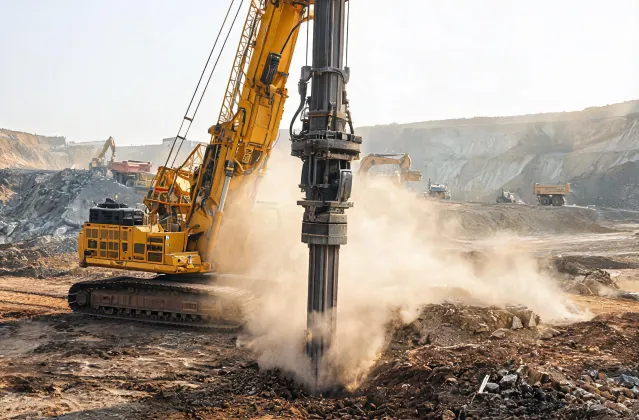
Mining & Mineral Infrastructure
Shaft collar piles, conveyor bent foundations, and temporary retaining walls where ground pressure and rotary drilling torque must stay inside geotech limits.
Industries we support
From mining shafts to coastal floodwalls, ABI vibratory hammers and drill rigs show up where pile penetration depth and vibration-frequency control decide whether the critical path holds.
Shaft collar piles, conveyor bent foundations, and temporary retaining walls where ground pressure and rotary drilling torque must stay inside geotech limits.
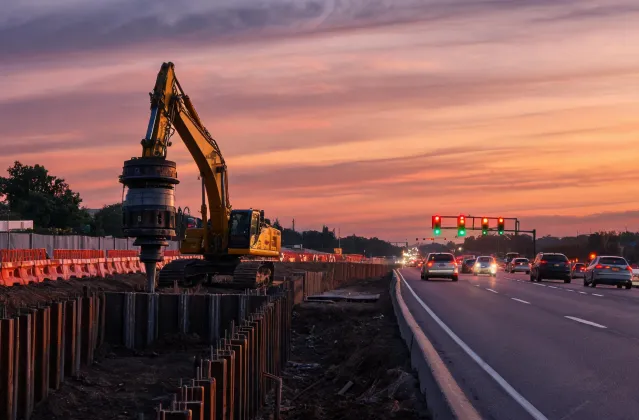
Sheet-pile and H-pile walls for grade separations—vibration frequency tuned so adjacent pavement and utilities stay within settlement thresholds.
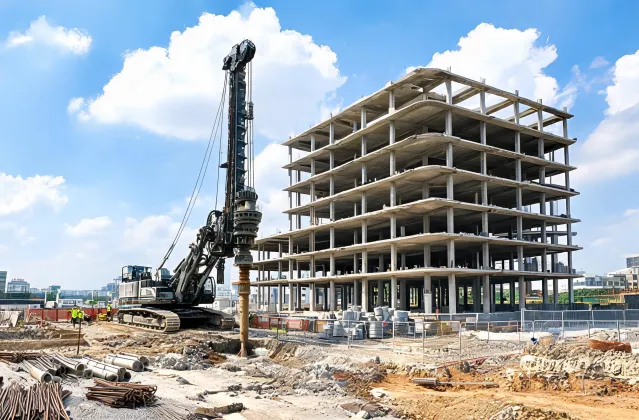
CFA and kelly-bar packages for mid-rise cores and podium mats where operating weight and mast height must fit tight urban envelopes.
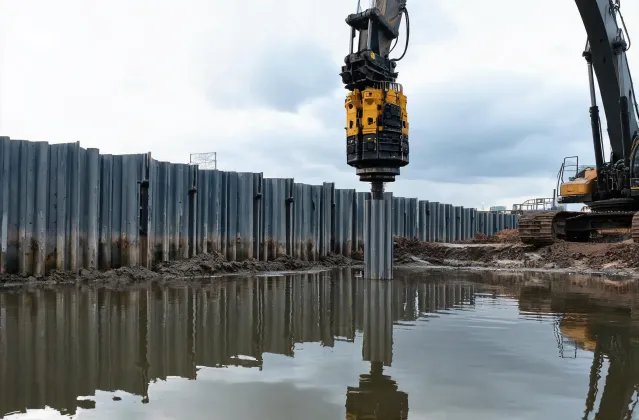
Floodwall and cofferdam sheet piles with corrosion-aware clamp jaws and Tier 4 packs for urban waterfront permit windows.
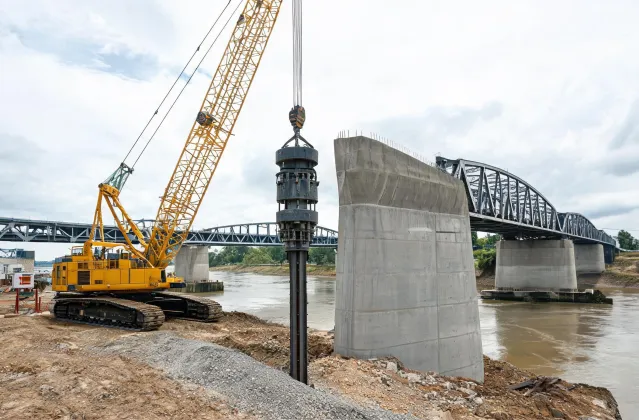
H-pile and pipe-pile driving where centrifugal force and hydraulic system pressure must match battered-pile geometry.
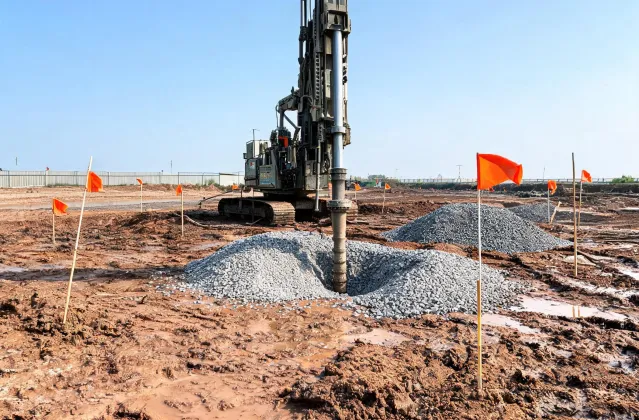
Vibro densification and gravel-grader finishing for soft-soil pads before structural piles or slab-on-grade pours.
Foundation buyers rarely purchase a vibratory hammer in isolation. Mining infrastructure teams balance ground pressure on spoil berms with rotary drilling torque for shaft collars. Roadway retaining-wall crews watch settlement thresholds beside live traffic. Building contractors need mast height and operating weight that clear adjacent façades. Water projects add tide windows and corrosion exposure on clamp hardware.
ABI application engineers translate those constraints into equipment classes, vibration frequency ranges, and commissioning checklists. When a dispute arises—such as whether sheet-pile vibro driving or bored piles better protect nearby utilities—we document both sides with reference jobs rather than slogan claims. Vibro driving often wins on schedule when granular soils accept displacement; bored piles win when adjacent utilities cannot tolerate vibration and rotary drilling torque can be controlled inside a casing. That record helps procurement managers and chief engineers defend the package in internal reviews.
| Decision | Side A — when it fits | Side B — when it fits |
|---|---|---|
| Sheet-pile vibro vs. bored piles | Granular soils, temporary works, floodwall schedule pressure; vibration frequency can be mapped to CPT without utility risk. | Cohesive strata, adjacent utilities, settlement caps; rotary drilling torque controlled inside casing outweighs vibro meterage. |
| Heavier crawler envelope vs. lighter carrier | Deep H / pipe piles needing higher centrifugal force and stable ground pressure on prepared pads. | Soft spoil berms or urban streets where operating weight and ground pressure would overload the working platform. |
Application boundaries: ABI packages are not a substitute for geotech design. We will not recommend forcing higher centrifugal force through cemented refusal layers, nor mounting a VH-90 class hammer on a carrier below the published 280 L/min @ 320 bar hydraulic envelope. Tide-window water jobs also require corrosion-aware clamp jaws and hose staging above splash zones—limits we log at commissioning, not after a mid-shift failure.
If your schedule already lists pile stations and carrier availability, send those files with the inquiry. We return a comparable installed-base citation within 48 hours whenever a similar soil and pile combination exists in our North American or export fleet history.
Share soil logs, pile schedule, and carrier class. Application engineers reply with a comparable ABI package and known vibration-frequency settings.
Request a reference match